SELECTED TRANSFORMATIONS
Selected Transformations
A chronology of projects that shaped how I think about restoration, transformation and value creation; across businesses, real estate, development and hospitality.
The Pattern
The asset changes. The pattern doesn’t.
I see potential before it becomes obvious. In an asset, a business, a team or an idea, I look for the value that is already there but not yet performing at its potential.
Then I identify what is holding it back: the structure, the positioning, the systems, the capital, the leadership or sometimes simply a belief about what is possible.
I build from strengths, redesign what isn’t working and create the conditions for growth.
The result is transformation: stronger performance, greater capability and more valuable assets.
Next
Looking for Asset Transformation?
Tell me about your project …
ALMONDS & CORALS · COSTA RICA · 2023–2026
Almonds & Corals
Project development · Design and capex · Execution · Operating leadership
Context
In 2023, I took on the transformation of Almonds & Corals, an established eco-hotel on Costa Rica’s Caribbean coast whose physical product, operating structure and commercial performance no longer reflected the potential of the asset.
This was no longer simply a restoration project. The building, guest experience, team, operating model and economics all had to move together.
Intervention
Led a nine-month $2.5M capital transformation while the hotel was closed, coordinating design, budgeting, procurement, contractors and operational planning. The existing 24-room jungle lodge was repositioned as a 30-room boutique hotel without increasing the original building footprint.
3 star lodge to 4 star boutique hotel transformation
After reopening, I moved from transformation into operating leadership: rebuilding the team and management structure, redesigning workflows and controls, strengthening revenue management and distribution, developing the food & beverage operation, and integrating Caribbean Hill Villas into the wider hotel operation.
The objective was to turn the physical transformation into sustainable operating performance.
Outcome
The transformation materially repositioned both the property and the business. Guest ratings strengthened, revenue increased, the operating platform expanded, and the asset developed from an underperforming eco-lodge into a professionally managed boutique hospitality operation. The fixed team came through it intact at 100% retention, the hotel earned Blue Flag and CST certification, and the management team runs it now without me.
+77.4%
Q1 revenue growth · 2025 → 2026
8.2 → 9.2
Booking.com guest rating
> 2x
EBITDA growth · H1 2026 vs H1 2025
4.2 → 4.8
Restaurant rating · Google

CARIBBEAN HILL VILLAS · COSTA RICA
Caribbean Hill Villas

Acquisition · Merger · Capex planning
Context
Caribbean Hill Villas operated as a small standalone hospitality property on Costa Rica’s Caribbean coast. Its scale limited the operational infrastructure, distribution reach and commercial capabilities that could economically be built around it independently.
The opportunity was not to create another operating structure. It was to connect the asset to one that already existed.
Intervention
Integrated Caribbean Hill Villas into the Almonds & Corals operating platform, bringing the property into a broader hospitality ecosystem rather than continuing to operate it as an isolated asset.
Centralized key functions including reservations, distribution, revenue management, guest communications and operational oversight, while maintaining the villas as a distinct accommodation product.
This allowed existing capabilities, systems and management infrastructure to serve an additional asset without replicating the entire cost base.
Outcome
Caribbean Hill Villas became part of a larger operating platform with stronger commercial reach and professional infrastructure, while creating additional scale and inventory for the Almonds & Corals operation. I prepared a capital expenditure plan for the villas; it was never executed. The value realised came from integration rather than from investment.
The result demonstrates a different form of value creation: not adding more infrastructure, but extracting more value from infrastructure already in place.
SHARED PLATFORM
More inventory · Existing infrastructure · Greater operating leverage
ECORAL · COSTA RICA · 2022–2024
Ecoral
Project development · Master planning · Conservation and permitting
Context
After years of restoring existing properties, Ecoral presented a different challenge: creating the structure from the beginning.
In 2022, I joined the development of a new eco-residential project on Costa Rica’s Caribbean coast, within the sensitive natural environment of the Gandoca-Manzanillo Wildlife Refuge.
Intervention
Led the master planning and design coordination of the development, translating the vision for low-density tropical living into a workable site plan.
Coordinated the architectural and technical disciplines, infrastructure planning and building-permit process, working within the environmental and regulatory constraints of developing in a protected coastal setting.
The challenge was not simply to design what could be built, but to determine what should be built within the landscape.
Outcome
Created the master planning and development framework required to move Ecoral from concept toward an executable residential project, establishing the spatial, architectural and permitting foundation for its development.
Six steps, from the survey of the land to the experience of a guest walking between the villas.


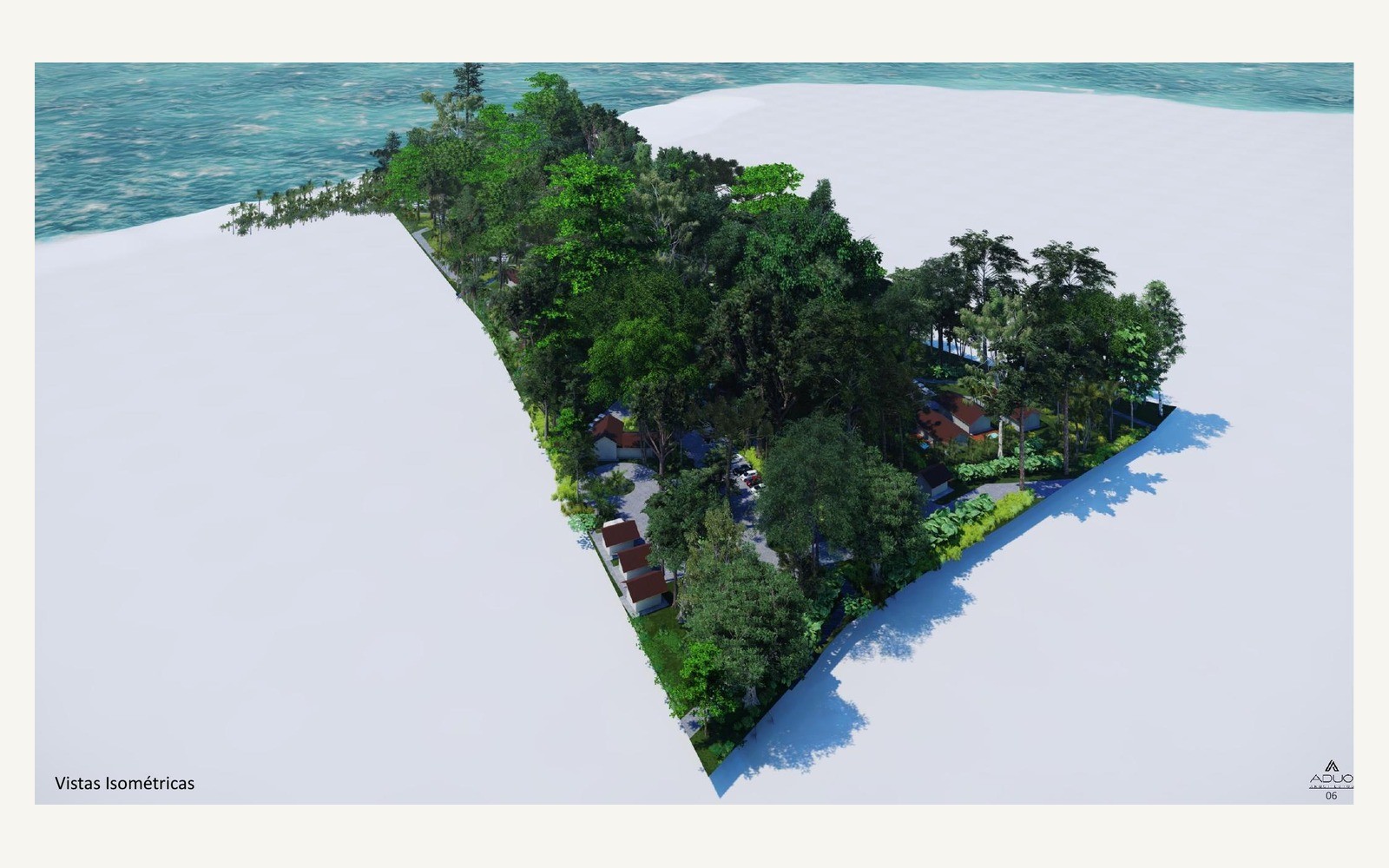

Read the land
Before anything is designed: every tree above 20 cm, each 20 cm of level, the watercourse, the forest zones and the maritime zone line, surveyed and mapped.

VEERE · NETHERLANDS · 2018–2022
Veere
Sluismeestershuis (Lockmaster's House), Veere
Project development · Restoration of cultural heritage
Context
In 2016, while cycling outside Veere, I found an abandoned historic building almost disappearing into its garden. The property had been neglected for years and was burdened by structural problems and a complicated acquisition process. There was interest, but the uncertainty kept buyers away.
I saw something worth restoring.
It took nearly a year to resolve the acquisition process and secure the property.
Intervention
The restoration became a multi-year project. I assembled a specialist team, led by an experienced regional architect, and approached the building in phases: stripping the structure, asbestos remediation, permitting, foundation engineering and ultimately full restoration. I also secured heritage subsidies covering up to 38% of the restoration budget.
The defining challenge was structural. The building had sunk substantially into the ground and had never been supported on piles. Working with structural engineers and a specialist foundation contractor, we lifted the entire building approximately 30 cm, stabilized and straightened it, and created the foundation from which the restoration could proceed.
Only then did we rebuild.
Outcome
Between 2018 and 2022, the deteriorated structure was transformed into a fully restored, distinctive heritage residence, preserving the architecture that made it irreplaceable and creating a contemporary trophy property.
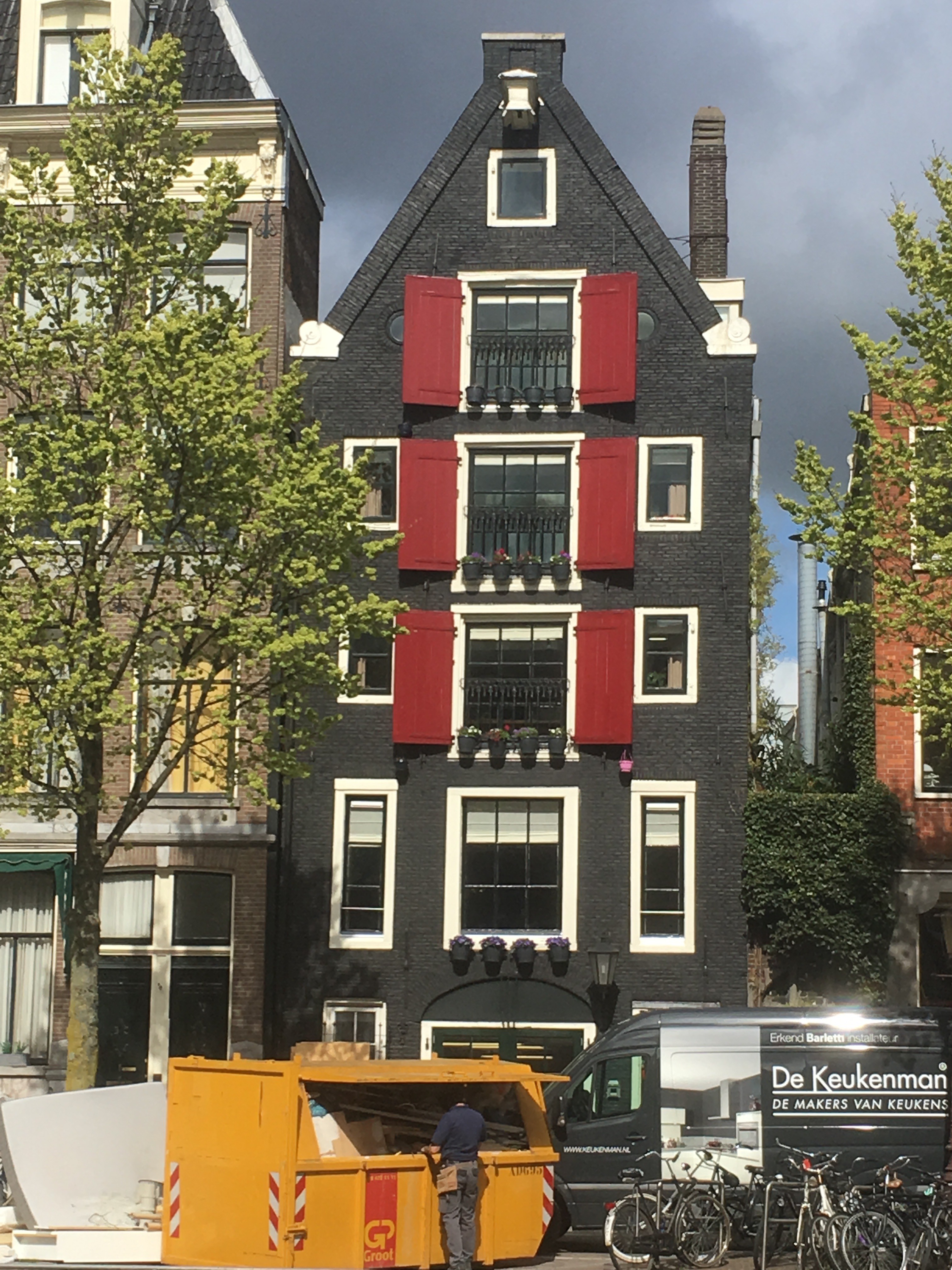
Prinsengracht 733 · Amsterdam · UNESCO canal ring · Acquired 2014
Prinsengracht 733
Project development · Restoration of cultural heritage · Exit
Context
After several residential renovation projects, I was ready for something more complex: a true restoration.
In 2014, I found it at Prinsengracht 733, a historic canal house with its original pakhuis façade in the heart of Amsterdam. The building had extraordinary character, but transforming it into a contemporary residence meant working within the constraints of one of the world’s most protected historic environments.
Intervention
I immersed myself in Amsterdam’s UNESCO heritage framework, restoration requirements and available subsidy structures, then led the project from acquisition through stripping, restoration and repositioning.
The objective was never to modernize away its history. It was to preserve what made the building irreplaceable while making it work beautifully as a contemporary home.
Outcome
The restored property became a distinctive modern canal residence, combining historic architecture with contemporary living.
It was ultimately sold for more than twice its original acquisition price.

LASER INC. · AMSTERDAM · 2008–2015
Laser Inc.
Founder and operator · Build · Exit
Context
Founded as a specialist cosmetic laser clinic with an initial focus on tattoo removal, at a time when cosmetic laser technology was still an emerging field.
Intervention
Built the business from the ground up while developing deep technical expertise in laser technology. Trained with laser manufacturer Asclepion in Germany, expanded the clinic into additional laser applications, and later represented the manufacturer at international industry trade shows.
Outcome
Built, positioned and successfully exited the business in 2015.
For investors, owners, and operators ready to examine what is possible.
Start a conversation